
A lucid nightmare is a frightening dream in which you realise you’re dreaming but can’t easily escape or change what’s happening. That mix of awareness and helplessness makes the fear feel more intense than in a regular nightmare. This guide covers what causes lucid nightmares, whether they’re dangerous, and how to stop them.
Usually, nightmares are the by, product of the brain dealing with stress, trauma, or unresolved feelings while asleep.
In these dreams, the person does not understand that what is happening is not real, and that is why they get scared or anxious when they wake up. Nevertheless, in a lucid nightmare, the dreamer acknowledges that they are in a dream but cannot get out or alter the scary events at the same time.
This mix of consciousness and being powerless is what makes lucid nightmares much more terrifying than regular nightmares.
Lucid nightmares can frequently be met during REM sleep, which is the stage of vivid dreaming.
Some people may experience them after they have undergone the practice of lucid dreaming or during the time of sleep deprivation and extreme tension. The brain is reactivated to a degree that allows it to identify the dream but for it not to be stable to the extent that full control be regained, leaving the dreamer in a realistic and dreadful situation.
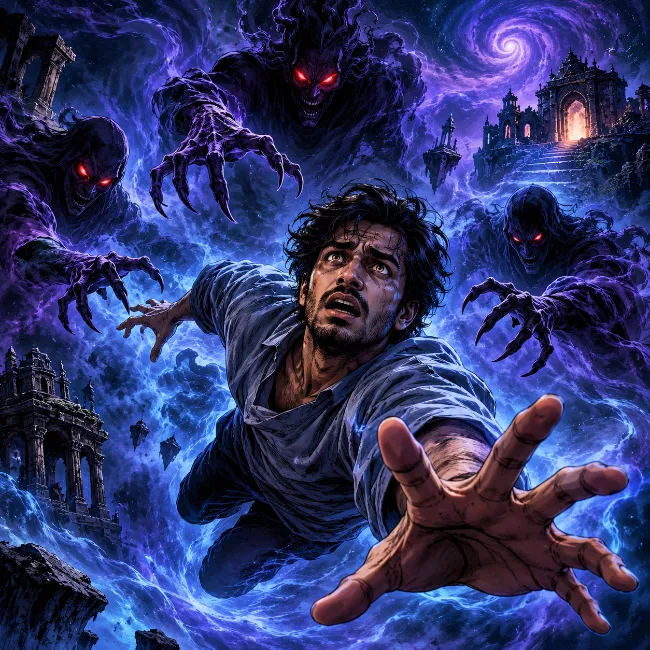
Instances of these include being chased, paralyzed, or seeing dark figures.
Though lucid dreaming can be a great means for the opening of the creative mind and the self, exploration, lucid nightmares are the other side of the coin. They may cause events like sleep paralysis, anxiety, or even insomnia if occurring all the time.

Since the mind feels alert but the body remains asleep, it could even cause confusion and fear after waking up.
To lessen the occurrence of these phenomena, one can take on relaxation techniques, keep a regular sleep schedule, and not practice lucid dreaming when under stress.
Basically, the appearance of lucid nightmares is the moment when the borderline between a dream and reality becomes vague, and in this case, the subconscious reminding both amazing and scary facts.
What are lucid nightmares?
Vivid and emotionally intense nightmares can make one feel incredibly that they are dreaming but, unfortunately, very seldom, the awareness happens while the dream is still going on.
Nevertheless, sometimes a person recognizes the dream while still living it. A sudden understanding is as in a happy lucid dream, only in this case, the experience may stay terrifying, forming a lucid nightmare.
There are several common characteristics of lucid nightmares:
- a confrontation of powerful forces
- violent self-ruling dream characters
- lack of dream control
- physical pain
- strong negative emotions
- awakening from the dream
Lucid dreams differ greatly from person to person, particularly concerning how much one realizes the dream during it.
This recognition is present in a scale that is characterized by completely unaware (non-lucid) and fully conscious within the dream state.
Regardless of your position on this spectrum, the plot of your dream can still go very different ways.
The setting, the people who appear, or their intentions may not be controlled by you always.
At times, these dream figures may behave strangely or even to frighten you.
The good news is that with more lucidity, you can start doing this as if the unsettling dream characters or situations were your dream images.
The main point to keep in mind is that these images mostly represent the hidden parts of you or the feelings that you are going through in your waking life.
If you grasp this relation, you will find that even the darkest nightmare can be a source of personal insight and growth.
Lucid Nightmare vs Regular Nightmare vs Sleep Paralysis
| Feature | Regular Nightmare | Lucid Nightmare | Sleep Paralysis |
|---|---|---|---|
| What it is | A disturbing dream that feels real while it’s happening | A frightening dream in which you realise you’re dreaming | A temporary inability to move or speak while falling asleep or waking up |
| Sleep stage | REM sleep | REM sleep | Transition between sleep and wakefulness (the body’s REM muscle paralysis carries over into waking) |
| Awareness | Unaware it’s a dream | Aware it’s a dream | Awake and aware of your surroundings |
| Sense of control | None | Limited or none (control varies with how lucid you are) | Cannot move; no control over the body |
| Main emotion | Fear, anxiety, sadness | Panic, helplessness, fear | Fear, dread, a sense of pressure or threat |
| Hallucinations | Dream imagery only | Vivid dream imagery | Often a felt presence, chest pressure, shadowy figures, buzzing sounds |
| Can you move on waking? | Yes, immediately | Yes, immediately | No, usually for seconds to a couple of minutes |
| Typical duration | Seconds to several minutes of dream time | Seconds to a few minutes (often feels longer) | Usually seconds to about two minutes |
| Common triggers | Stress, trauma, horror media, certain medications, alcohol withdrawal | Stress, lucid dreaming practice, poor sleep, anxiety | Sleep deprivation, irregular schedule, sleeping on your back, stress |
| Is it a dream? | Yes | Yes | No, it’s a sleep-wake transition state, though dream-like imagery can intrude |
| Usually harmful? | Not physically; recurrent ones can disrupt sleep | Not physically; can cause distress and poor sleep | Not physically, but frightening and can cause sleep anxiety |
| How to reduce them | Consistent sleep, stress management, avoid scary media before bed, imagery rehearsal therapy for recurring ones | Reality checks, grounding or calming in the dream, relaxation before bed, pause lucid dreaming when stressed | Regular sleep schedule, enough sleep, sleeping on your side, staying calm and focusing on small movements (fingers or toes) |
| See a doctor if… | Nightmares are frequent, cause daytime distress, or follow trauma | They’re frequent or disturb your sleep or mood | It happens often, with excessive daytime sleepiness or other sleep symptoms |
What causes scary lucid dreams?
Every dream we experience is a reflection of our unconscious and subconscious mind. When we encounter scary lucid dreams, it’s often our brain’s way of processing difficult or uncomfortable emotions that we might not face while awake.
These frightening lucid dreams, also known as lucid nightmares, can occur for several reasons. The most common factor is your current state of mind.
If you’re burdened with sadness, stress, or negative emotions, your dreams may mirror those feelings, resulting in disturbing experiences.
Here are a few possible causes behind lucid nightmares:
- Expectations: Dreams often respond to what we believe or expect. If you anticipate something scary or unsettling, your mind might bring that scenario to life while dreaming.
- Suppressed emotions: Unresolved fears, hidden traumas, or repressed memories can surface during sleep, using dreams as a way to release what’s been held back in the subconscious.
- Media influence: Watching horror movies or playing intense, violent games before bed can imprint strong emotional images on your mind, which may then replay as frightening scenes in your dreams.
Ultimately, scary lucid dreams are not random—they’re messages from your inner self, urging you to acknowledge and process what’s buried deep within.
By understanding their cause, you can begin to turn these nightmares into opportunities for emotional healing and self-awareness.
Lucid nightmare facts you should know
Below are few popular fact about lucid nightmares and you should aware about them if you want to explore lucid dream and astral projection.
1. Most Non, Lucid Dreams Are Unpleasant
When a dream is remembered, it is often also known as very confusing, random, or even meaningless at first sight.
Some dreams can be quite transparent with their meanings, while most of them imply having a reflection to decode the message.
Dreams convey their ideas through symbols and metaphors and not through literal images.
Every image or scene represents feelings, memories, or ideas that are deeper, just as a photograph or a movie is a representation of a moment of the waking world.
It is quite fascinating that the people with diverse backgrounds often report identical dream symbols. Still, the meaning of a certain symbol can be very different from one person to another.
The emotions related to the symbols also contribute to the general mood of the dream, and scientific studies have shown that the majority of the dream, states found are negative.
2. Nightmares Can Be Useful
Despite the fact that nightmares can be very annoying, they, however, quite often have a function to perform. They uncover mental issues that we might be ignoring in our daily life.
The function of the dream is to act as a mediator connecting the latest events with the old ones, along with the lessons we learned from them.
Nightmares represent your brain’s creative way to resolve the emotional issues that are deep down in the subconscious, a kind of creative problem, solving at the subconscious level.
The problems can vary from small worries to severe issues of life, like death or fear of failure.
By doing the stressful events over again through dreams, your subconscious is attempting to get you ready, thus facilitating your confrontation with what seems overpowering.
Nightmares can even be an indication of the existence of some issues that you have not yet recognized.
They are, in fact, your brain’s way of saying, “Watch out, this is important and needs to be sorted.”
When we move past the fright and concentrate on what the nightmare wants to tell us, we often get the insight and the help that comes directly from our inner selves.
3. Nightmares Are Mental Projections
Regardless of how horrendous the nightmare might be, consider that these events are the projections of your mind, symbolic reflections of the feelings or aspects of your character that are in need of attention.
According to Jungian psychology, a projection is similar to a photo. A photo depicts something that exists, but it is not the thing itself, it is just an image of it.
In the same way, when you dream about a person or a thing, you are not in contact with the actual person or event, but with your mental representation of them.
Memory, emotion, and meaning blend in these images to create symbolic representations of the dream realm. Knowing this fact can considerably lessen the terror of a nightmare.
When you remember that the figures you see in your dreams are not real threats to you, but merely reflections of your inner world, their power over you diminishes.
This means that in the case of a lucid nightmare or a nightmare, one should always think that what one is experiencing is symbolic.
The nightmare is telling you something about your life while you are awake and understanding it makes fear turn into clarity.
4. Manage Lucid Nightmares
Lucid dreaming means being aware that one is dreaming when still inside the dream.
Having such a revelation during a nightmare, puts you in a wonderful position whereby you are free to decide your next action.
You are not required to respond with panic or terror instead; you may assume control.
Different lucid dreamers have provided various accounts of how they managed the fright once they realized that it was a dream.
Here are a few examples:
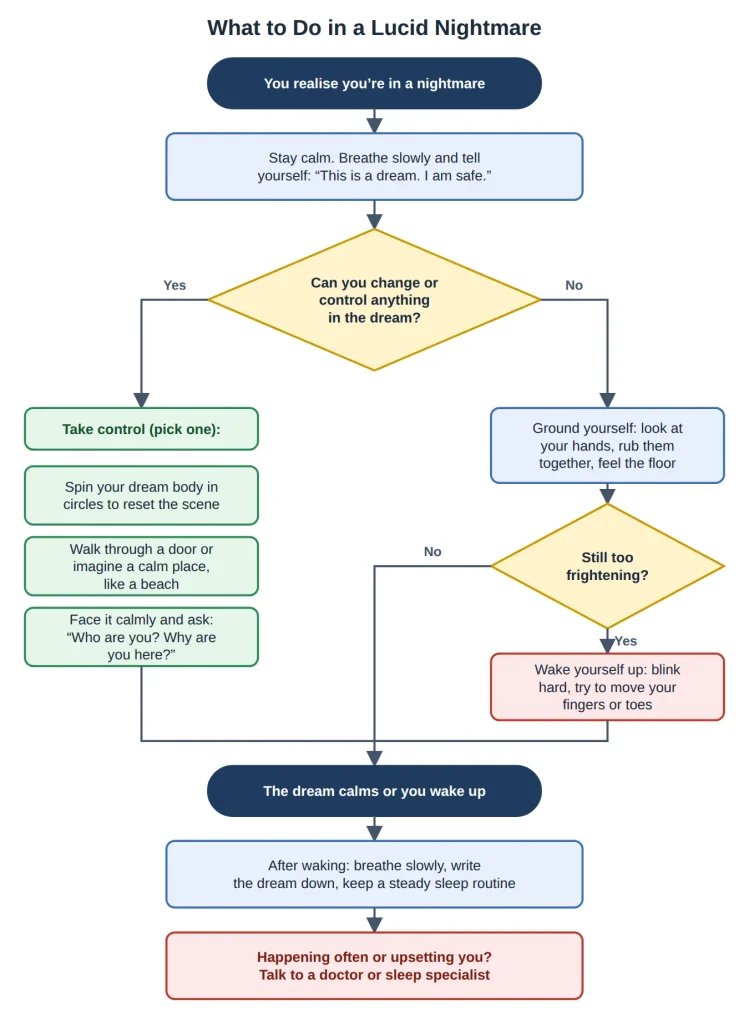
Option A: Just continue running and hiding, as you usually would with a lower level of lucidity, and wait for the nightmare to end.
Option B: You can completely change the atmosphere by using your awareness of the lucid dream and move to a place such as a relaxing beach, which gives you peace (higher level of lucidity).
Option C: If it makes you feel strong, then gather your bravery and confront the fear, attack if that is the case.
Option D: Calmly look at the dream figure and say, “Who are you? Why have you come here?”
Different attitudes are mirrored by every one of these responses. The authentic question still remains: What would you do if this matter happened to you in real life?
The way we behave in our waking life is often shown in our dreams. While fleeing might give you a quick relief, it is through confronting and understanding the problem that true healing is most likely to occur.
Lucid nightmares are not something to feel sorry for, they are open doors for you. By acknowledging that you are dreaming, you bring the conscious to your subconscious world.
This consciousness gives you the opportunity to safely explore your fears, face them directly, and turn the nightmare into a powerful tool for self, development.
Are Lucid Nightmares Dangerous?
Lucid nightmares are not physically dangerous and cannot harm your body. Occasional ones are usually harmless, but frequent or intense episodes can disrupt your sleep, raise anxiety, and sometimes point to an underlying issue such as stress, trauma, or a sleep disorder worth discussing with a doctor.
Why they feel dangerous
In a lucid nightmare you know you’re dreaming but can’t easily escape or change what’s happening. That mix of awareness and helplessness can make the fear feel more intense than in a regular nightmare. The danger is emotional, not physical: nothing that happens in the dream can injure you.
When they can become a problem
Lucid nightmares are generally harmless on their own, but they can cause indirect problems if they happen often:
- Poor sleep: waking up frightened and struggling to fall back asleep can lead to fatigue and low concentration.
- Sleep anxiety: some people start dreading bedtime, which can make nightmares more likely.
- Worsened stress or low mood: repeated distressing dreams can add to existing anxiety.
- Trial-and-error lucid dreaming: if your nightmares began or increased after practising lucid dreaming techniques, taking a break is a reasonable first step.
When to see a doctor
Consider talking to a doctor or sleep specialist if:
- Nightmares happen more than once a week or keep coming back for weeks.
- You feel anxious, exhausted, or low during the day because of them.
- They started after a traumatic event or involve replaying that event.
- You’re afraid to sleep or avoid going to bed.
- They come with other symptoms such as loud snoring, gasping, acting out dreams, or severe daytime sleepiness, which can signal a sleep disorder.
- They began after starting or stopping a medication, or after changes in alcohol or substance use.
If you ever feel hopeless or have thoughts of harming yourself, contact a doctor or local emergency or crisis service right away.
Frequent nightmares are treatable. Options such as imagery rehearsal therapy and cognitive behavioural therapy for insomnia have research support, and a clinician can help you decide what fits.
Read : Best Astral Projection Techniques to Practice in 2027: Beginner’s Guide
How do I get rid of lucid nightmares?
You can easily control your dream and avoid lucid nightmares. All you need to follow some basic tips mentioned here. These tips can improve your experience and make it easy to perform better while sleeping.
Avoid Scary or Stressful Content
Your subconscious absorbs what you expose it to. Watching horror movies or playing violent games before bed can fuel frightening dream imagery.
To prevent this, opt for relaxing or positive entertainment before sleep.
Take Back Control
The more confident and aware you become during lucid dreams, the easier it is to redirect or dissolve a nightmare.
With practice, you can consciously shift the dream scene, replace it with something peaceful, or simply wake yourself up.
Stay Calm During the Dream
If a nightmare unfolds and you feel fear rising, remind yourself: “This is just a dream. I am safe.
I am in control.” Repeat this mantra mentally until the fear fades. Calm awareness can quickly weaken the dream’s intensity.
Use the Spinning Technique
If you still have some control within the dream, try spinning your dream body in circles.
This can quickly reset the dream environment and help you transition to a new, more positive setting.
Let Go of Worry
Dreams are shaped by your expectations. The more you fear having a lucid nightmare, the more likely it is to happen.
Instead, focus on positive imagery before sleeping—imagine peaceful scenes, calm emotions, and joyful experiences. A relaxed mind naturally attracts better dreams.
Lucid nightmares may feel unsettling, but they are also opportunities for understanding, healing, and growth.
Whether you choose to interpret them or simply learn to control them, remember—you are always the creator of your dream world.
Conclusion
Lucid nightmares are frightening, but they can’t physically harm you. Occasional ones are common and usually ease with better sleep habits, stress management and calm in-dream techniques. If they happen often, disrupt your sleep or follow a traumatic event, talk to a doctor or sleep specialist. Effective treatments exist.
Lucid nightmares can feel intense and terrifying, but they are not truly dangerous. These dreams occur when you become aware that you’re dreaming during a frightening situation, which can make the emotions feel more real and overwhelming.
However, lucid nightmares cannot harm you physically—they are experiences created entirely by the mind.
In fact, they often serve a psychological purpose by revealing hidden fears, stress, or unresolved emotions. Learning to recognize this can transform fear into understanding and control.
For some, lucid nightmares can even be opportunities for emotional healing and self-discovery. While they may cause temporary anxiety or disturbed sleep, they do not pose any real threat to your mental or physical health. With practice in lucid dreaming and relaxation techniques, anyone can learn to manage and overcome these experiences.
So, no—lucid nightmares aren’t dangerous; they are simply reflections of the mind seeking balance and awareness.
FAQ
Q. What are lucid nightmares?
A lucid nightmare occurs when you realize you’re dreaming during a frightening or stressful dream but cannot immediately wake up or change it. Unlike regular nightmares, you are aware that it’s a dream, yet the emotions—fear, panic, or helplessness—feel very real. Lucid nightmares often happen when your subconscious is processing deep fears or emotional stress.
Q. What causes lucid nightmares?
Lucid nightmares can be triggered by stress, anxiety, irregular sleep schedules, or consuming scary media before bed. They may also occur when someone is learning lucid dreaming techniques but struggles with dream control. Emotional tension, trauma, or suppressed fears can manifest through vivid, lucid dreams, turning them into unsettling experiences.
Q. How long do lucid nightmares last?
In real-time, a lucid nightmare may last anywhere from a few seconds to around 20 minutes. However, because dreams often distort time, it can feel much longer. The length usually depends on how deep you are in REM sleep and your level of awareness or control within the dream.
Q. What are the types of lucid dreaming?
There are generally two main types of lucid dreaming:
Low-level lucidity: You realize you’re dreaming but have limited control over the dream.
High-level lucidity: You are fully aware and can alter the dream’s direction, environment, or even end it.
Lucid nightmares typically fall into the lower-lucidity category, where awareness exists but control is weak.
Q. Are lucid nightmares dangerous?
Not physically. Lucid nightmares can’t injure you, but they can be distressing and, if frequent, disrupt sleep or point to stress, trauma or a sleep disorder. See a doctor if they happen more than once a week, cause daytime anxiety or tiredness, or follow a traumatic event.