
Ever heard about The People-Pleasing Paradox and the psychology behind pleasing people that lead you less happy. Explore the hidden risk of pleasing people for their attention that leads you in a life of less authenticity and depend upon others judgement.
Do you often go out of your way to keep everyone around you happy and satisfied?
Do you believe that always putting others first will earn you the love, appreciation, and respect you deserve?
If your answer is yes, you may be experiencing People-Pleasing behaviour. While your intentions are kind and caring, constantly trying to make everyone happy can negatively affect your emotional well-being and personal happiness.
People-pleasing often means putting other people’s needs, feelings, and expectations ahead of your own. Over time, this habit can become emotionally exhausting and lead to unhealthy relationships.
Ironically, instead of receiving the love and respect you hope for, excessive people-pleasing may result in being overlooked, taken for granted, or feeling disconnected from both others and yourself.

Understanding why people become people-pleasers is the first step toward positive change.
By recognising the motivations behind your people-pleasing habits and learning about their impact on your relationships and mental well-being, you can begin overcoming people-pleasing and build healthier, more balanced connections without sacrificing your own happiness.
- The Psychology of People-Pleasing
- Why People-Pleasing Doesn't Get Love and Respect
- The Connection between Self-Worth and People-Pleasing
- Q. What are the common signs of people-pleasing?
- Q. How can I stop being a people-pleaser without feeling guilty?
- Q. Is people-pleasing a trauma response or a personality trait?
- Q. Why do people-pleasers struggle to set healthy boundaries?
- Q. Can people-pleasing affect mental health and relationships?
The Psychology of People-Pleasing
Before we talk about hidden risk of people pleasing you must know about What Is People-Pleasing?
People-Pleasing is a behaviour driven by a strong desire to be liked, accepted, and approved of by others.
People with this tendency often feel that keeping everyone happy is the best way to maintain relationships and avoid conflict. This personality trait is commonly known as sociotropy.
If you struggle with people-pleasing behaviour, you may regularly put other people’s needs, opinions, and expectations ahead of your own.
While this may seem kind and selfless, doing it too often can come at the expense of your own emotional well-being.
There are many reasons why people become people-pleasers. In some cases, it develops because of childhood experiences, family dynamics, or social conditioning. Mental health challenges such as anxiety and co-dependency can also contribute to people-pleasing habits.
According to Psychology Today, people-pleasing may begin in childhood.
For example, if a parent’s love felt conditional or they were emotionally unavailable, a child may learn to seek approval as a way to feel accepted and valued.
As a people-pleaser, you may find it difficult to set healthy boundaries or express your true thoughts, especially when you think others may disagree with you. This fear of conflict or rejection can make it harder to stand up for yourself.
Over time, the constant need for approval can create a cycle of seeking validation from others, which can gradually damage your confidence and self-esteem.
In your effort to make everyone else happy, you may unintentionally ignore your own feelings, needs, and personal goals.
Although pleasing others may provide short-term satisfaction, it rarely leads to lasting happiness or genuine respect.
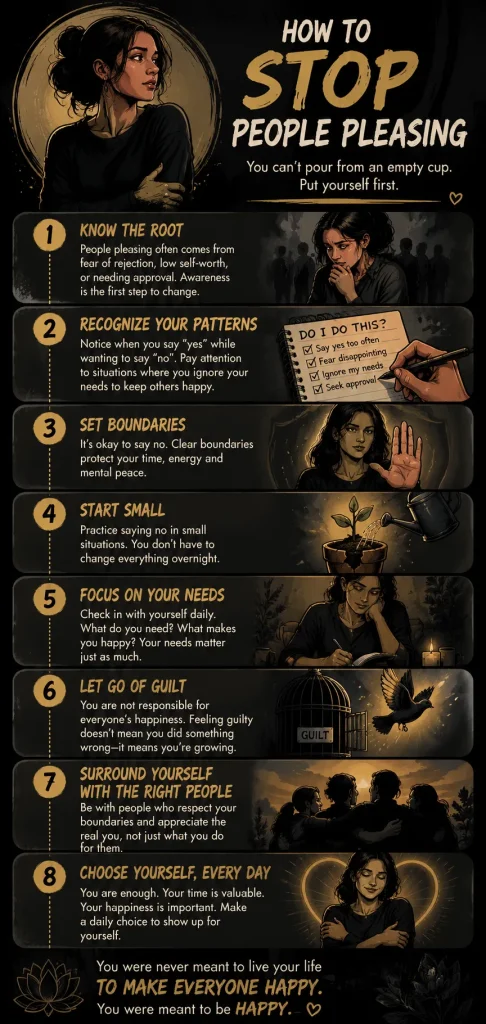
Learning how to stop people-pleasing starts with recognising these patterns. By setting healthy boundaries, valuing your own needs, and building self-confidence, you can begin overcoming people-pleasing while creating stronger and more balanced relationships.
Why People-Pleasing Doesn’t Get Love and Respect
As someone who once struggled with People-Pleasing, I understand the overwhelming guilt and anxiety that can come with setting boundaries, saying “no,” or choosing your own needs over someone else’s.
To avoid these uncomfortable feelings, many people ignore their own needs, avoid setting healthy boundaries, and take on more responsibilities than they can handle. Unfortunately, these people-pleasing habits often lead to emotional burnout, frustration, and resentment.
Does this sound familiar?
If you constantly put other people’s needs ahead of your own, find it difficult to say “no,” or feel emotionally exhausted from trying to keep everyone happy, you may be trapped in the cycle of people-pleasing.
Although it may seem like you’re preventing conflict or keeping relationships peaceful, this behaviour often has the opposite effect.
Instead of creating healthy connections, excessive people-pleasing behaviour can leave you feeling drained, unappreciated, and disconnected from your own feelings, needs, and well-being.
Now it’s time to understand The Hidden Effects of People-Pleasing.
Inauthenticity and Its Impact
One of the biggest consequences of People-Pleasing is losing touch with your authentic self.
When you constantly change your behaviour or opinions to satisfy others, you may begin to ignore your own values, feelings, and desires.
Over time, people can sense when someone is not being completely genuine.
This can make it harder to build trust, earn respect, and form meaningful relationships. At the same time, continually putting everyone else’s needs before your own can leave you feeling emotionally empty and unfulfilled.
Learning how to stop people-pleasing starts with accepting who you truly are.
Being honest about your thoughts and feelings helps create stronger relationships based on trust rather than constant approval.
Read : Core Psychology of changing someone’s mind instantly with 5 Most Powerful tricks
The Lack of Healthy Boundaries
Many people who struggle with people-pleasing behaviour find it difficult to set healthy boundaries. As a result, others may unintentionally take advantage of their kindness and willingness to help.
For example, imagine a friend regularly calls you late at night to talk about their relationship problems.
Even though you have an early morning and need proper rest, you stay on the phone because you feel guilty about saying no.
This is a common example of people-pleasing habits. Deep down, you know you should protect your own time and energy, but the fear of disappointing someone makes it difficult.
Ask yourself this simple question: What is the worst that could happen if you put your own well-being first just this once?
Setting healthy boundaries is not selfish. It shows self-respect and teaches others how to respect your time, energy, and personal needs.
How People-Pleasing Affects Relationships
People-pleasing can create unhealthy relationships by causing an imbalance between giving and receiving.
When you constantly put other people’s happiness before your own, your efforts may not always be returned with the same level of care and support.
Healthy relationships require mutual respect, understanding, and balance. While kindness and compassion are important, they should never come at the cost of your own emotional well-being.
By overcoming people-pleasing, you can build relationships where both people feel valued, respected, and supported equally.
The Connection between Self-Worth and People-Pleasing
Many experts believe that people-pleasing is closely connected to self-worth.
A strong need for approval and acceptance often drives this behaviour, causing people to seek validation from others instead of trusting themselves.
One of the main reasons why people become people-pleasers is the fear of rejection or criticism. These fears may develop from childhood experiences, past relationships, or deeply rooted beliefs about personal value.
Unfortunately, depending on other people’s opinions for your confidence can slowly weaken your self-esteem.
The more you focus on meeting everyone else’s expectations, the easier it becomes to ignore your own feelings, dreams, and personal goals.
Over time, excessive people-pleasing behaviour can make it difficult to express your opinions, make independent decisions, or manage relationships without constantly seeking reassurance from others.

Another common habit is hiding negative emotions.
Many people-pleasers believe that showing disappointment, frustration, or anger will make others reject them. Instead, they suppress their true feelings and pretend everything is fine.
Although this may prevent conflict in the short term, it can seriously affect your emotional health and sense of identity over time.
Breaking the cycle of People-Pleasing begins with recognising the fears and beliefs that fuel this behaviour. As you learn to set boundaries, express your needs honestly, and communicate your emotions with confidence, your self-worth naturally becomes stronger.
The journey of overcoming people-pleasing is not about becoming selfish.
It is about valuing yourself just as much as you value others. When you respect your own needs, you create healthier relationships, greater emotional balance, and a more authentic connection with the people around you.
Learn how to Breaking the People-Pleasing Cycle with few simple guide.
Read : 4 Powerful Technique to Learn How to Mind Control Someone Instantly without knowing them in 2024
Build Self-Awareness
The first step in overcoming People-Pleasing is developing self-awareness.
Take time to understand why you feel the need to please others and identify the situations where you’re most likely to put someone else’s needs before your own.
Pay attention to the emotions that trigger your people-pleasing behaviour, such as guilt, fear of rejection, or the desire for approval.
As you begin to recognise these patterns, you’ll find it easier to make choices that reflect your own values instead of constantly seeking acceptance from others.
Greater self-awareness gives you the confidence to stand up for yourself and make healthier decisions that support your emotional well-being.
Learn to Be Assertive
Learning assertive communication is one of the most effective ways to break the people-pleasing cycle.
Being assertive means expressing your thoughts, feelings, and needs honestly and respectfully without becoming aggressive or remaining silent.
Simple techniques like using “I” statements, listening carefully to others, and focusing on the real issue can help you communicate more confidently.
As you practise these skills, you’ll become more comfortable saying “no” when necessary and expressing your opinions, even if they differ from those around you.
This is an important step in overcoming people-pleasing and building healthier relationships.
Develop Healthy Boundaries
Creating healthy boundaries is essential if you want to stop people-pleasing habits. Boundaries protect your time, energy, and emotional well-being while allowing you to maintain your own identity in relationships.
According to Dr. Carla M. Shuman, self-reflection is the foundation of setting effective boundaries.
“Before you can communicate boundaries, you have to really know what your boundaries are, and sometimes people don’t.”
— Dr. Carla M. Shuman
Before setting boundaries with others, take time to understand what feels comfortable and acceptable to you. Once you’re clear about your limits, communicate them honestly and respectfully.
Instead of trying to change another person’s behaviour, explain how you will respond if your boundaries are crossed.
For example, imagine you have a friend who regularly calls you late at night. Rather than answering every time out of guilt, you could calmly say:
“I need to wake up early for work, so if you call late at night, I won’t be able to answer. Let’s talk earlier in the evening instead.”
This approach is respectful, clear, and helps protect your personal time without damaging the relationship.
Remember, setting healthy boundaries is a gradual process.
At first, it may feel uncomfortable or unfamiliar, especially if you’ve spent years people-pleasing. However, with patience and consistent practice, boundaries become easier to maintain and lead to greater confidence, healthier relationships, and improved emotional well-being.
Read : 4 Amazing Mind Power Techniques Everyone Should Use For Best Result from Daily Life In 2024
Final Thoughts on the People-Pleasing Paradox
Breaking free from People-Pleasing begins with recognising that your needs, feelings, and well-being matter just as much as everyone else’s.
While kindness and compassion are valuable qualities, constantly seeking approval at the expense of your own happiness can leave you feeling emotionally exhausted and undervalued.
As you become more aware of your people-pleasing behaviour, practise self-compassion instead of judging yourself.
Rather than allowing the fear of rejection or disapproval to control your choices, focus on building genuine relationships based on honesty, mutual respect, and trust.
This change can strengthen your self-worth and help you develop healthier, more balanced connections.
It’s important to remember that not everyone will agree with your decisions or like every choice you make—and that’s completely normal.
One of the most powerful lessons in overcoming people-pleasing is accepting that you cannot make everyone happy all the time.
When you learn how to stop people-pleasing, set healthy boundaries, and value your own needs, you create space for stronger relationships and greater emotional well-being.
The people who truly care about you will respect your boundaries and appreciate you for who you are, not just for what you do for them.
By understanding why people become people-pleasers and taking small, consistent steps toward personal growth, you can break free from the endless cycle of seeking validation.
In doing so, you’ll build greater confidence, stronger self-respect, and a happier, more authentic life.
FAQ
Q. What are the common signs of people-pleasing?
Some of the most common signs of people-pleasing include struggling to say “no,” constantly seeking approval, avoiding conflict, apologising too often, and putting other people’s needs ahead of your own. You may also feel guilty when setting boundaries or worry excessively about disappointing others. Recognising these behaviours is the first step toward overcoming people-pleasing and building healthier relationships.
Q. How can I stop being a people-pleaser without feeling guilty?
Learning how to stop people-pleasing without feeling guilty takes time and practice. Start by setting small, healthy boundaries, saying “no” when necessary, and reminding yourself that protecting your well-being is not selfish. As your confidence grows, the guilt will gradually decrease, making it easier to prioritise your own needs while still treating others with kindness and respect.
Q. Is people-pleasing a trauma response or a personality trait?
People-pleasing can be both. For some people, it develops as a personality trait, while for others it may be a response to childhood experiences, emotional neglect, or past trauma. Anxiety, low self-esteem, and fear of rejection can also contribute to people-pleasing behaviour. Understanding the root cause can help you choose the most effective way to overcome it.
Q. Why do people-pleasers struggle to set healthy boundaries?
Many people-pleasers fear that saying “no” or expressing their true feelings will lead to conflict, rejection, or disappointment. Because of this fear, they often ignore their own needs to keep others happy. Learning to set healthy boundaries helps protect your emotional well-being and creates more balanced, respectful relationships.
Q. Can people-pleasing affect mental health and relationships?
Yes. Chronic people-pleasing behaviour can increase stress, anxiety, emotional exhaustion, and low self-esteem. It may also create one-sided relationships where your needs are constantly overlooked. By overcoming people-pleasing, practising self-care, and communicating honestly, you can improve both your mental health and the quality of your relationships.